If your erections have become unreliable during a rough patch at work, you are not imagining the connection. Stress is one of the most common reasons men struggle to get or keep an erection, and a new study has put some striking numbers on how closely the two are linked in younger men.
The good news is that stress-related erection problems are usually very treatable. The less good news is that "it's probably just stress" is also the easiest way to miss something that needs checking. Here is how to tell the difference, and what actually helps.
In this guide
What the new study found
Researchers in China studied 826 men aged 22 to 40, all in full-time work, and scored how much pressure each of them was under. They looked at things like working hours, how much control people had over their work, promotion pressure, and how supportive their manager and colleagues were.
The more stress the men were under, the worse their erectile function tended to be. In the highest-stress group, around half had erectile dysfunction, and their odds of it were roughly ten times higher than in the lowest-stress group. Long hours seemed to work through the stress hormone cortisol. A supportive manager seemed to have a protective effect.
The researchers also suggest that hormone changes show up several weeks before erection problems do, which would give a window of a couple of months to act. That idea needs more work before anyone can rely on it.
It is one study, from one country, and it shows a link rather than proving that stress caused the problems. But it fits with what doctors have long seen in practice, and with NHS guidance, which lists stress and tiredness among the most common reasons for occasional erection problems.
Why stress gets in the way
An erection needs your body to be relaxed enough for extra blood to flow into the penis and stay there. Stress pushes your body the other way. When you are under pressure, your system shifts into a state built for dealing with threats, and sex is not a priority in that state.
Long-term stress also chips away at the things that keep erections reliable. It affects sleep, it makes it more tempting to drink more or exercise less, and it can lower your interest in sex in the first place.
Then there is the loop that catches a lot of men. One bad night leads to worry about the next time, and the worry itself makes the next time harder. Within a few weeks, the original work stress can matter less than the anxiety about sex that has grown on top of it. We cover that loop in more detail in our guide to the mental effects of ED.
Signs it might be stress
There is no single test that proves an erection problem is down to stress, but some patterns point that way:
- the problems started around a stressful period, such as a new job, long hours, money worries or a relationship strain
- you still wake up with erections, or have no trouble on your own
- it comes and goes rather than getting steadily worse
- it is worse when you are tired, distracted or worried about performing
- you are younger and otherwise in good health
None of these rules out a physical cause. They are pointers, and they are worth mentioning if you speak to a doctor or pharmacist.
Don't assume it's "just stress"
This is the part that matters most. Erection problems can be an early sign of other health conditions, including high blood pressure, high cholesterol, diabetes and low testosterone. The blood vessels in the penis are small, so they can show signs of trouble before the rest of the body does.
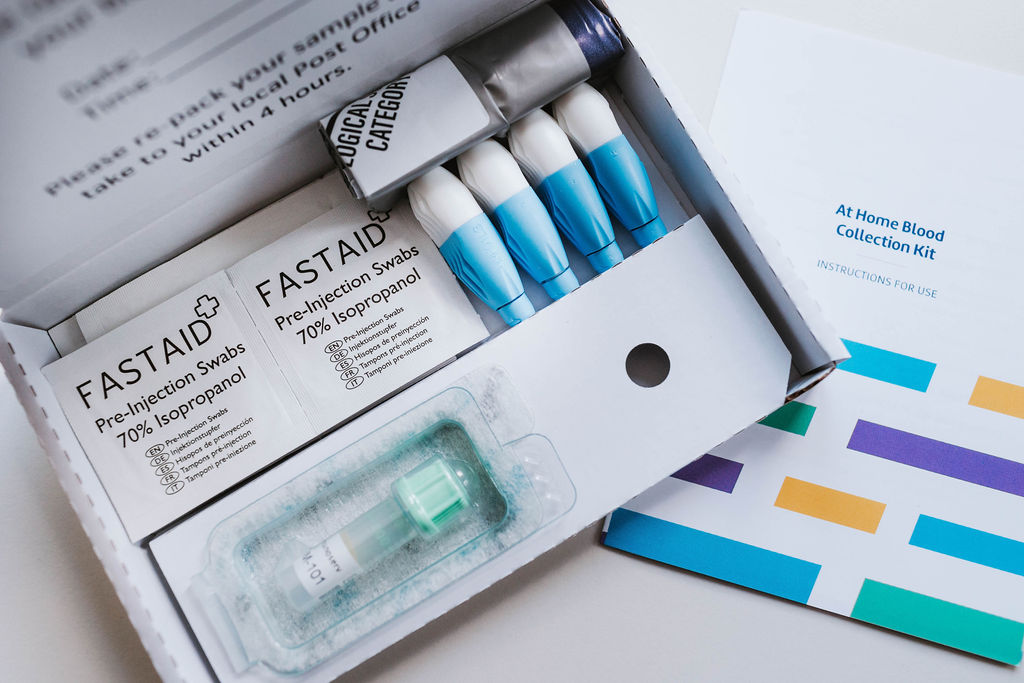
The NHS advice is to see a GP if erection problems keep happening, because they might be a sign of a health condition that can be treated. A few simple blood tests usually cover the main physical causes. These typically include a test for diabetes (HbA1c), a cholesterol check, and a testosterone test taken in the morning, when levels are highest. You can get these through your GP or with a private at-home blood test.
If the results come back clear, that is useful in itself. It makes a stress-related cause much more likely, and it takes one big worry off the table.
What actually helps
The most effective approach is usually to work on the stress and the erection problem at the same time, rather than waiting for life to calm down.
Small, boring changes do a lot of the work. Better sleep, regular exercise, cutting back on alcohol (the NHS suggests no more than 14 units a week) and stopping smoking all help your blood vessels and your mood. The NHS also lists reducing stress and anxiety as one of the main things you can do yourself.
If work is the main driver, the study's finding about supportive managers is worth taking seriously. Talking to your manager about workload, using occupational health if your employer has it, or setting firmer limits on your hours are all real treatments here, even if they do not feel like it.
Talking therapy can help a lot, particularly if anxiety about sex has taken hold. The NHS notes that counselling and therapy can help when erection problems are linked to emotional or mental health problems, but that waits can be long. Some men find private therapy or an app-based programme quicker to start.
Medication can also play a part, even when the cause is mainly stress. The main ED medicines, such as sildenafil and tadalafil, work by helping blood flow to the penis. For some men, a few successful experiences with a tablet are enough to break the anxiety loop, and they then need it less over time. You can get these after an online or in-person consultation, and Viagra Connect is available from a pharmacist without a prescription after a short conversation. They are not suitable for everyone, particularly if you take nitrates for heart problems, so the consultation questions matter.
When to get help
See a GP or pharmacist if erection problems keep happening, if they started suddenly without an obvious reason, or if you have other symptoms that could point to a physical cause, such as unusual tiredness, being very thirsty or needing to pee more often. Many sexual health clinics also offer walk-in appointments if you would rather not go through your GP.
You do not need to wait until it has been going on for months. Erection problems are very common, and the person you speak to will have had the same conversation many times.
Bottom line
Stress can absolutely cause erectile dysfunction, and the new research suggests the link is especially strong in younger men under heavy pressure at work. That is reassuring in one way, because stress-related problems usually improve once you deal with the stress and the anxiety that builds around it.
But treat "it's just stress" as something to confirm, not assume. A quick check of your blood pressure, blood sugar, cholesterol and testosterone rules out the physical causes, and then you can focus on the fixes that work, whether that is sleep, a conversation with your manager, talking therapy, a short course of tablets, or all of them together.
Medical disclaimer
This article is for general information only and is not medical advice. Speak to a qualified clinician before starting or changing any treatment.
Sources
- NHS: Erection problems (erectile dysfunction)
- Huang et al. (2026), International Journal of Clinical Practice: Workplace psychological stress and erectile function in young men
- Medical Xpress: Work-related stress can cause erectile dysfunction in young men (9 September 2026)
- News-Medical: Workplace stress may impair erectile function in young men (9 September 2026)
 UK Health Market Round-Up: MPs Call NHS Obesity Care an Indefensible Failure
 UK Treatment Promo and Pricing Round-Up: Week Commencing 26 October 2026