Search for the price of testosterone replacement therapy and you will mostly find monthly figures that start with "from". Those numbers matter, but the first-year cost and what is bundled into the plan matter more.
Private TRT in the UK often lands around £1,200 to £1,700 in the first year once assessment is included. The NHS route can be much cheaper, but getting onto it is usually slower and harder.
In this guide
What private TRT costs
Private TRT usually has two costs: getting assessed and then paying for ongoing treatment. The assessment may include a venous blood test, consultation and confirmatory testing.
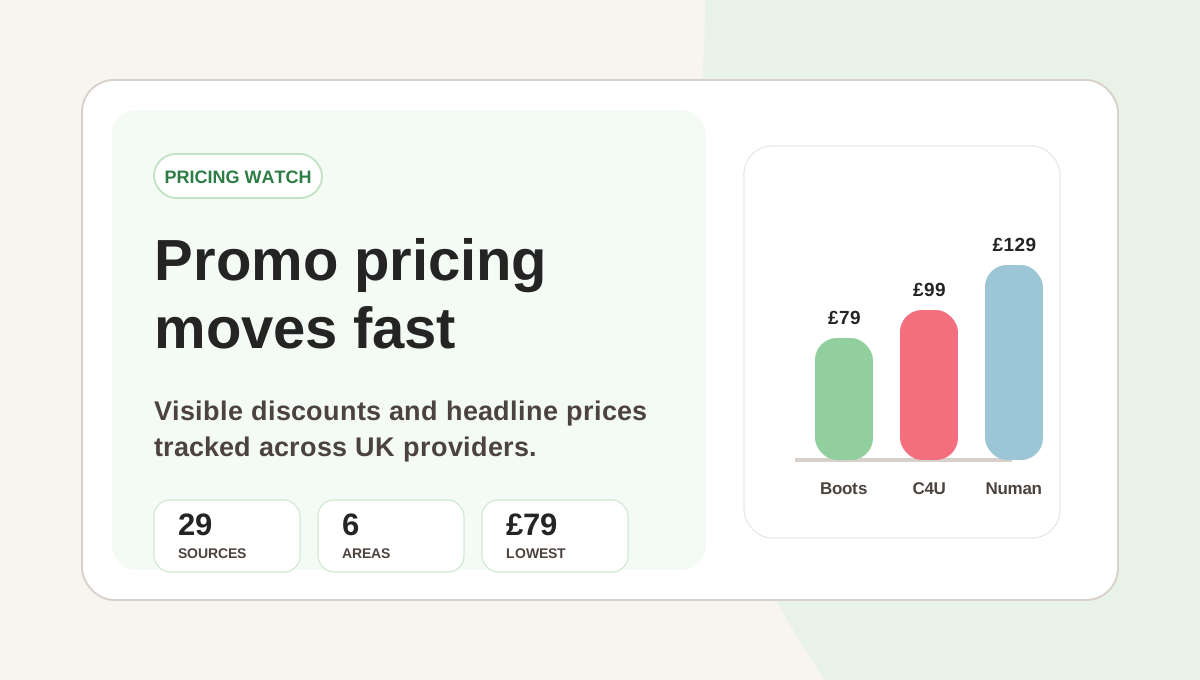
Numan currently lists oral TRT from £89 per month, topical TRT from £99 per month and injectable TRT from £129 per month, with follow-up blood tests and doctor consultations included. Other private providers often sit in a similar broad band, but the exact bundle can differ.
Not every provider offers every format. Some services focus on gels, while others offer injections or oral testosterone. If you already know how you want to take treatment, compare format as well as price.
A cheaper starting blood test does not always mean a cheaper route to treatment. Ask what the whole first year costs if you are accepted.
What makes one clinic's price different?
Two clinics can advertise similar monthly prices and still cost different amounts over a year. Check:
- Whether monitoring blood tests are included or billed separately.
- Whether the initial assessment is separate or folded into the plan.
- Whether there is a minimum term.
- Whether the listed price is only for a starting dose.
- Whether repeat consultations, dose changes and GP letters are included.
- What happens to your money if you are assessed as unsuitable.
The NHS route is far cheaper, if you can get on it
If a GP diagnoses testosterone deficiency and prescribes treatment, you pay the standard NHS prescription charge. In England, that is currently £9.90 per item. In Scotland, Wales and Northern Ireland, NHS prescriptions are free.
In England, a prescription prepayment certificate can cap costs if you pay for regular prescriptions. The NHSBSA currently lists £32.05 for three months and £114.50 for twelve months.
So the NHS route can be dramatically cheaper than private TRT. The trade-off is access, speed and the amount of dedicated support around monitoring and dose review.
The four catches with NHS TRT
1. Qualifying can be hard. Diagnosis usually needs symptoms plus low early-morning blood results, often repeated. UK guidance puts total testosterone below 8 nmol/L in the range where treatment is usually considered, above 12 nmol/L in the range where it is usually not, and 8 to 12 nmol/L in a grey zone.
2. Access varies. A 2025 Delphi consensus in the Journal of Sexual Medicine reported strong clinician agreement that testosterone deficiency care varies significantly across the UK.
3. It can be slow. Repeat morning blood tests, GP appointments and possible endocrinology referral can turn the route into months rather than days.
4. Ongoing support may be thinner. Private plans often bundle monitoring and specialist reviews. NHS follow-up can be more periodic and less hands-on once treatment is established.
Before you commit
- Get proper morning blood tests, usually twice, whichever route you use.
- Ask private providers for total first-year cost, not only the monthly headline.
- Check whether ongoing monitoring bloods are included.
- Find out the minimum term and how to stop.
- Ask what happens if you are assessed as not suitable.
- Remember TRT is usually long-term, so the annual figure matters.
Bottom line
Private TRT commonly costs around £1,200 to £1,700 in the first year once assessment is included. The NHS can cost £114.50 a year at most for prescriptions in England, and nothing for prescriptions in Scotland, Wales and Northern Ireland, but access is harder and slower. Compare the whole service, not just the monthly "from" price.
Prices in this article were checked on 1 September 2026 and change regularly. Confirm current costs with the provider before signing up.
Medical disclaimer
This article is for general information only and is not medical advice. TRT requires blood testing, clinical assessment and ongoing monitoring by a qualified healthcare professional.