
The NHS starts testing cancer blood tests in 200 GP practices across England.
A new diagnostics trial, a survey on weight-loss jab stigma, a large study on low testosterone and the legal green light for pharmacist prescribing.
A University of Birmingham trial will check whether simple blood tests can help GPs spot abdominal cancers sooner, with more than 20,000 patients in at least 200 practices. A LloydsPharmacy Online Doctor survey found many people on weight-loss medicines hide their treatment, some by avoiding their local pharmacy. A pooled study of over 26,000 men linked the lowest testosterone levels to a higher risk of dying from cancer. The legal framework for NHS pharmacist prescribing came into force. Diagnosis and prescribing are both moving closer to the high street, and the NHS is now testing which parts of that actually work.
Cancer blood tests go on trial in 200 GP practices
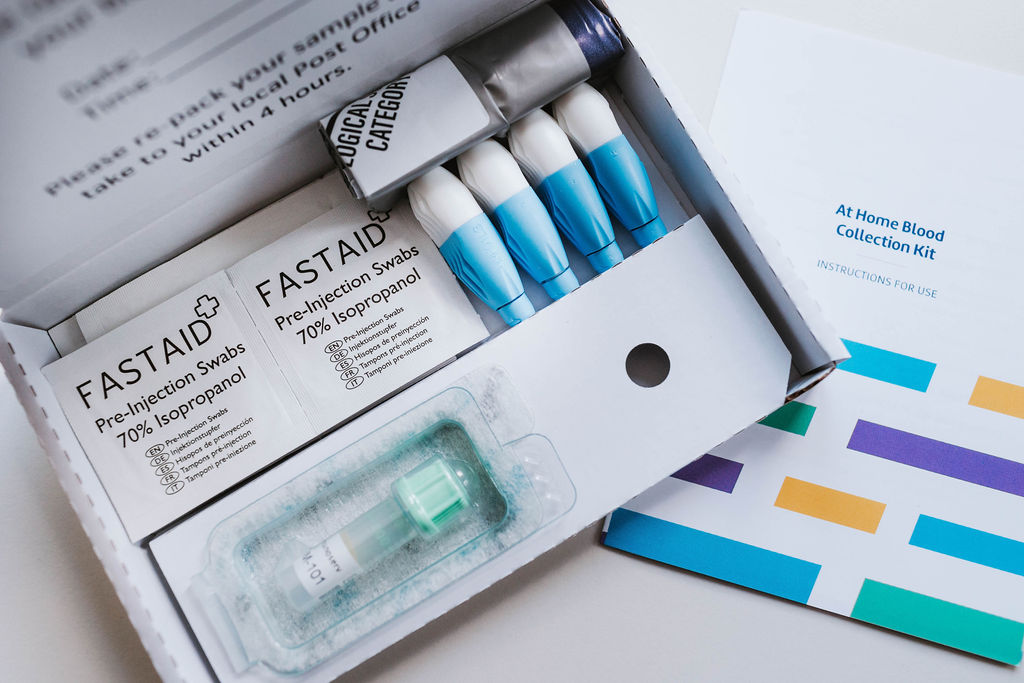
The University of Birmingham announced STRIDE-RCT on 4 November. It will run in at least 200 GP practices in England and include more than 20,000 NHS patients, with up to £8.49 million from the Office for Life Sciences through the National Institute for Health and Care Research.
Patients aged 45 and over who see their GP with abdominal symptoms, such as persistent bloating or discomfort, will be offered a place. One or two extra tubes of blood are taken alongside routine tests. The tests look for signs of several cancers in one sample, including bowel, stomach, pancreatic, liver, ovarian, kidney, bladder and prostate cancer, and suggest where in the body a cancer may be. Half the practices will offer the tests alongside usual care and half will provide usual care alone.
Co-chief investigator Professor Aneel Bhangu said the tests might help GPs separate cancer from more common causes of these symptoms, but the evidence has to be certain before they are used across the NHS. Around 71,000 people in England are diagnosed with pancreatic, stomach, liver, ovarian or bowel cancer each year.
If you are 45 or over and see your GP about ongoing tummy symptoms, you may be asked to join. These tests are not yet proven, so a private multi-cancer blood test is no substitute for seeing your GP about symptoms that do not go away.
One in six people on weight-loss medicine avoided their local pharmacy to keep it private
LloydsPharmacy Online Doctor surveyed 2,000 UK adults who were taking, considering or had taken weight management treatment, reported by Chemist+Druggist on 4 November. 16% had skipped collecting their medicine from a local pharmacy to hide their use, and 14% had it sent to a different address. 83% said weight-loss drugs carry stigma, and 56% said that stigma affected how they used or accessed treatment.
15% said embarrassment had delayed them seeking clinical help. Half kept their treatment hidden from most of their loved ones, and a quarter admitted lying about how they lost weight. The survey was run by a company that sells these treatments online, so treat the figures as one provider's snapshot.
Wanting privacy is common, and you can choose where your medicine is delivered. Whichever route you choose, keep your GP informed, because side effects and other medicines still need someone who knows your full history.
Men with the lowest testosterone had an 18% higher risk of dying from cancer
A study in The Lancet Healthy Longevity, led by Professor Bu Yeap at the University of Western Australia, pooled data on more than 26,000 men from 11 long-running studies in Australia, the United States and Europe. Men in the lowest fifth of testosterone levels had an 18% higher risk of dying from cancer than those in the highest fifth, after adjusting for age and other health factors. The risk began to rise below about 8.6 nmol/L.
Testosterone level was not linked to prostate cancer risk. Lower levels of two other hormones, sex hormone-binding globulin and luteinising hormone, were. The study shows an association only, and the authors say there is no evidence yet that taking testosterone lowers cancer risk.
This is not a reason to start TRT. If you have symptoms of low testosterone, a proper blood test and a clinician's review are the right first step, and weight, activity and diabetes all affect your levels too.
The legal framework for NHS pharmacist prescribing is now in force
An NHS update on 6 November said the legal directions for community pharmacy prescribing have been enacted and that Drug Tariff Parts VIC and VIF have been updated. Pharmacies that prescribe must follow updated specifications for Pharmacy First, which now includes prescribing pathways, and for the Pharmacy Contraception Service.
Pharmacies cannot start straight away. Each one has to submit a declaration to the NHS Business Services Authority, get approval from its integrated care board and link its designated prescribing pharmacists before it can prescribe. NHS England is holding a webinar for pharmacy owners on 9 November.
Over the coming months more local pharmacies should be able to prescribe for some conditions and for contraception without a GP appointment. Ask your pharmacy whether it has signed up.
Weight loss
- Bain & Company forecasts that the share of UK consumers taking a GLP-1 medicine will rise from 3% this year to 5% by 2030, and that 12% of adults will have taken one by then, up from 7% now, according to The Grocer on 4 November. Its survey of 1,027 UK consumers found users spend 10% less on desserts, sweets and biscuits than non-users.
Women's health
- Northern Ireland Health Minister Robbie Butler announced £1.95 million for endometriosis services on 3 November. £700,000 goes to the two regional endometriosis centres in the Belfast and Western trusts, and £1.25 million is shared across the five health trusts to support a new regional pathway. Endometriosis UK called it an encouraging step.
Regulation and the NHS
- MHRA ran its eleventh #MedSafetyWeek from 2 to 8 November, asking people to report side effects through the Yellow Card scheme. You can now sign in to Yellow Card with NHS login.
Digital health business
- Hims & Hers, which owns Zava and Juniper in the UK, reports third-quarter results after the US market closes today, 9 November.
We found no new UK stories on hair loss or erectile dysfunction from the past seven days, so those areas are skipped this week.
Medical disclaimer
This article is for general information only and is not medical advice. Speak to a qualified clinician before starting or changing any treatment.
Sources
- University of Birmingham: New blood test-based clinical trial to help spot cancers earlier (4 November 2026)
- Chemist+Druggist: Patients avoiding local pharmacy over GLP-1 stigma, study reveals (4 November 2026)
- ScienceDaily: Low testosterone linked to 18% higher risk of dying from cancer (November 2026)
- NHS Networks: NHS community pharmacy prescribing legal commencement (6 November 2026)
- The Grocer: GLP-1 weight loss drug use set to double by 2030 (4 November 2026)
- The Pharmaceutical Journal: MHRA approves orforglipron weight-loss pill (10 August 2026)
- Endometriosis UK: Health Minister announces £1.95 million investment in endometriosis services across Northern Ireland (3 November 2026)
- Community Pharmacy England: MHRA Drug Safety Update, #MedSafetyWeek 2 to 8 November 2026
- Hims & Hers: Third quarter 2026 results date (12 October 2026)
 UK Health Market Round-Up: Pharmacists Warn Over AI-Edited Photos for Weight-Loss Jabs
 UK Health Market Round-Up: MPs Call NHS Obesity Care an Indefensible Failure
